
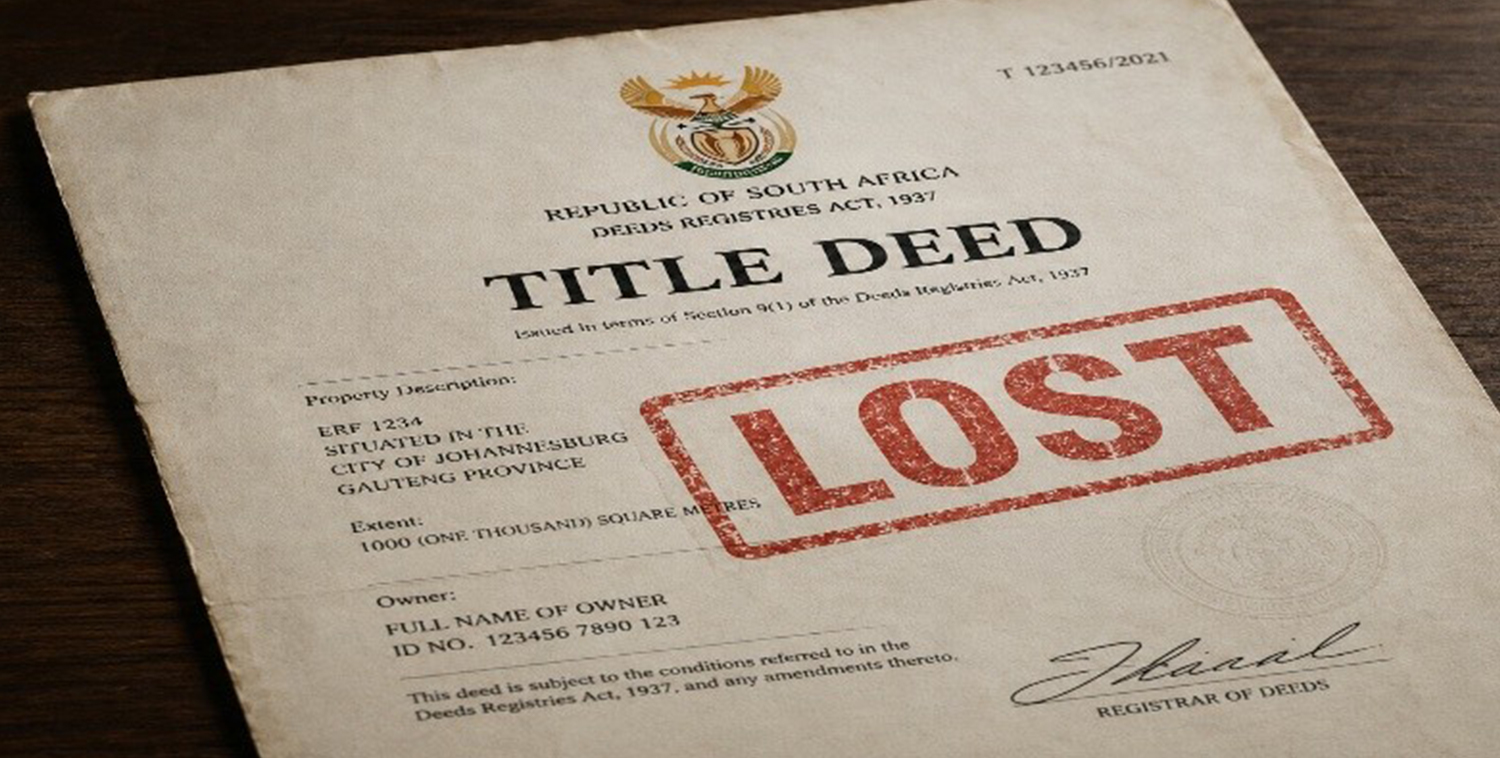
A title deed is the most important legal document relating to immovable property. It serves as proof of ownership and includes details of important rights and conditions which pertain to the property. Although many title deeds are now put into an electronic format in the Deeds Registry system, the original physical title deed still needs to be presented when a property is bonded or transferred. Unfortunately, title deeds get lost, mislaid or damaged.
In terms of Regulation 68(1) of the Deeds Registries Act, if any deed conferring title to land, registered lease or sub-lease, registered cession or any mortgage or notarial bond is lost or destroyed, the registered holder can make an application for a duplicate original from the Registrar of Deeds.
The process is as follows:
Once all the requirements set out in Regulation 68 (1) have been complied with, the matter may be lodged in the Deeds Registry.
Who Pays for the Replacement?
If the owner misplaced or accidentally destroyed the title deed while it was in his possession, the owner is generally responsible for all costs associated with obtaining the replacement, including Deeds Office fees, costs of publishing the notice, conveyancer’s fees and disbursements.
In the instance where the original title deed is lost by a financial institution, whilst held as security for a mortgage bond, the financial institution assumes the responsibility of appointing an attorney to act on their behalf and attend to the necessary application. The cost applicable to the application will be paid by the financial institution.
Conclusion
The replacement of a lost title deed involves strict legal requirements and compliance with the Deeds Registries Act and Regulations. An incorrectly prepared application may result in delays or rejection by the Deeds Office.
At KEBD Inc, our conveyancing team assists clients with every step of the process, from placing the notice, preparing the necessary affidavit and supporting documentation for lodgement of the application with the Deeds Registry and obtaining the certified replacement deed.
By Kgomotso Bridget Sebothoma (Candidate Legal Practitioner) | Conveyancing Department
Disclaimer:
This article is for the purpose of general information only and does not constitute nor must it be construed as legal advice. Specialist legal advice must be sought in respect of a specific legal matter. We accept no liability, damage, loss and/or responsibility, whether direct or consequential, for any actions taken or failure to take any actions, based on the content contained herein.
© 2026 Klagsbrun Edelstein Bosman Du Plessis Inc. All rights reserved.